Streamlining the Planner Experience: From Venue Discovery to Final Proposal
ROLE
Senior UX/UI Designer
INDUSTRY
Travel & Hospitality
TOOLS
Figma, FigJam
3-10
Events Managed at a Time
75%
Reduction in Apps Used
4
Weeks to Proposal
OVERVIEW
Consolidating fragmented sourcing tools into a single planner workspace.
Amex Global Business Travel (Amex GBT) needed a next-generation event sourcing and planning platform to modernize how enterprise meeting planners manage events. To support the pitch, our cross-functional team ran a high-velocity 4-week sprint to design MEET (Meetings & Events Engagement Technology). We created a comprehensive story and interactive prototype demonstrating how a unified platform could reduce manual context switching, surface preferred suppliers, and leverage AI to dramatically increase operational efficiency.
THE CHALLENGE
What did we solve for?
01
Tool Fragmentation &
Context Switching
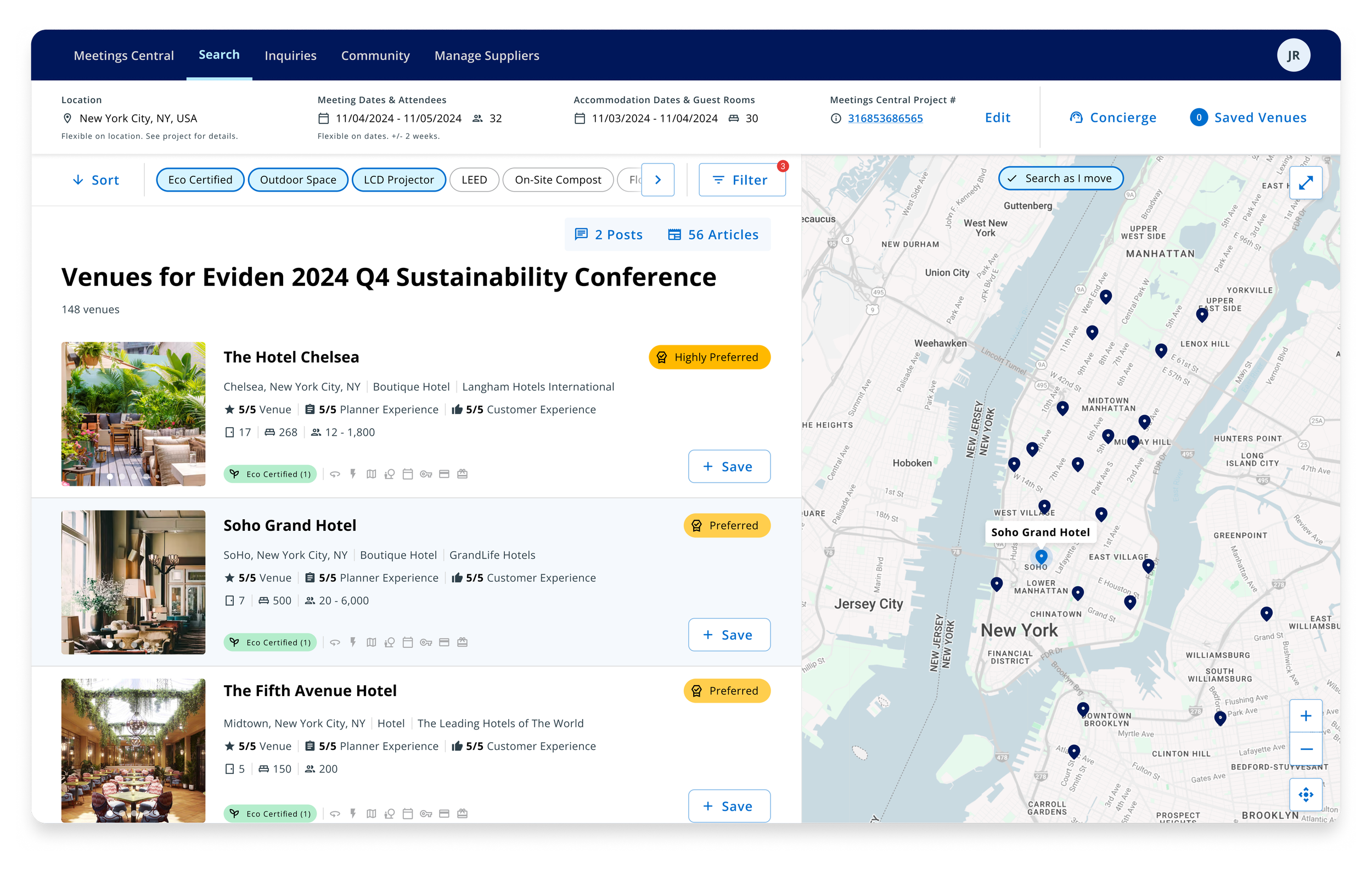
Enterprise event planners constantly jump across 4–6 separate systems—switching tabs between internal venue databases, external search portals, manual RFP builders, and peer recommendation channels. Finding preferred venues and generating proposals requires tedious manual data copying across disconnected platforms.
The Solution: A unified enterprise workspace consolidating venue discovery, preference-backed search filters, and instant RFP generation into a single continuous workflow.
02
Siloed Institutional Knowledge
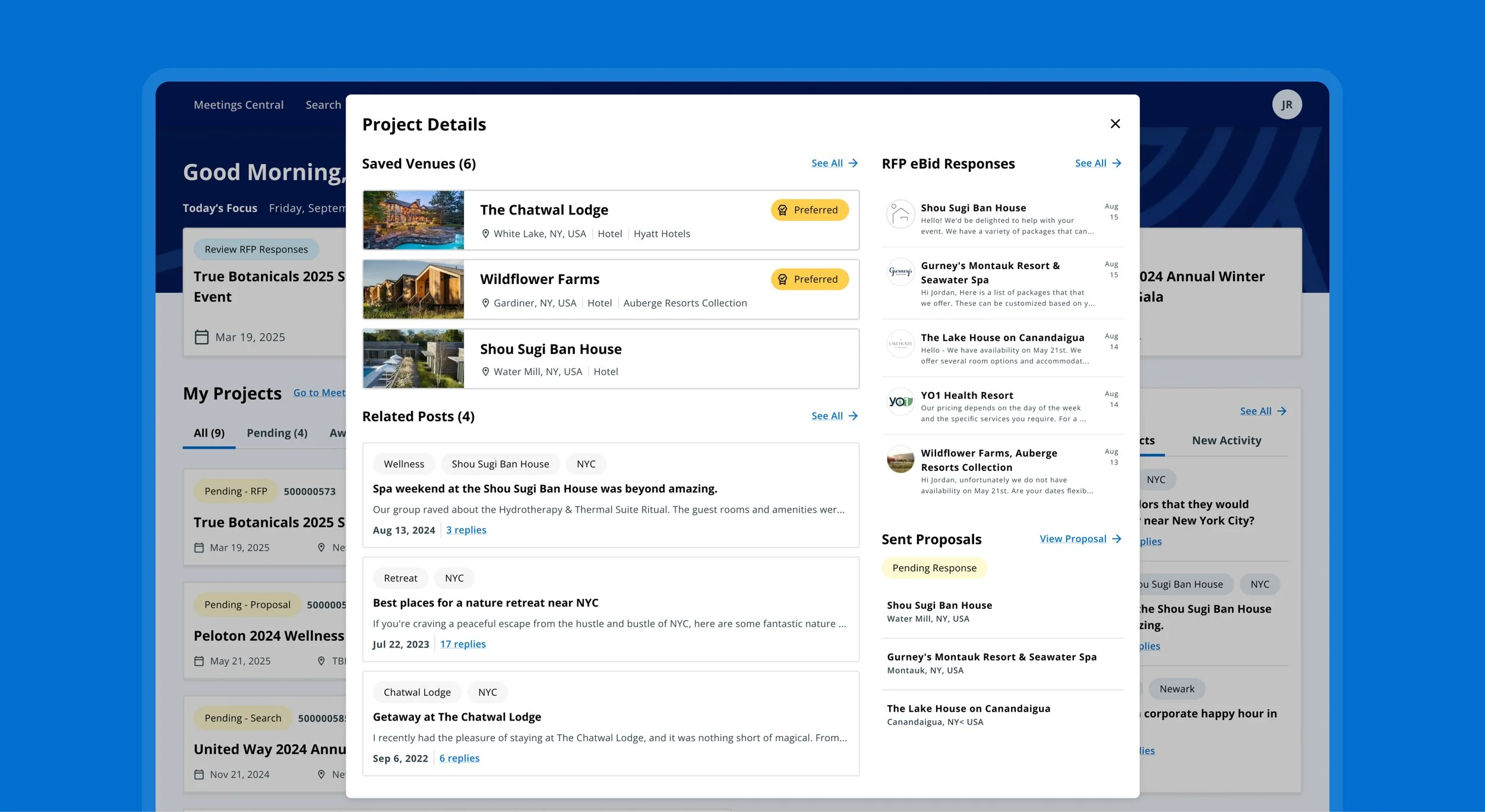
Critical local network insights, peer venue reviews, and past event performance stay trapped in email chains, chat logs, and uncurated files. Planners lack immediate access to team recommendations during active sourcing.
The Solution: An integrated community layer surfacing peer reviews, preferred supplier flags, and local network intelligence inline alongside search results.
03
Manual RFP Creation Friction
Turning venue selections into formal proposals is manual and time-consuming. Planners must manually re-enter event parameters, policy criteria, and venue details into external sourcing platforms for every request.
The Solution: A seamless proposal engine that automatically converts saved venue lists into pre-populated RFPs backed by AI proposal-drafting concepts.
OUR PROCESS
The Work in Progress
User Flows & Site Map
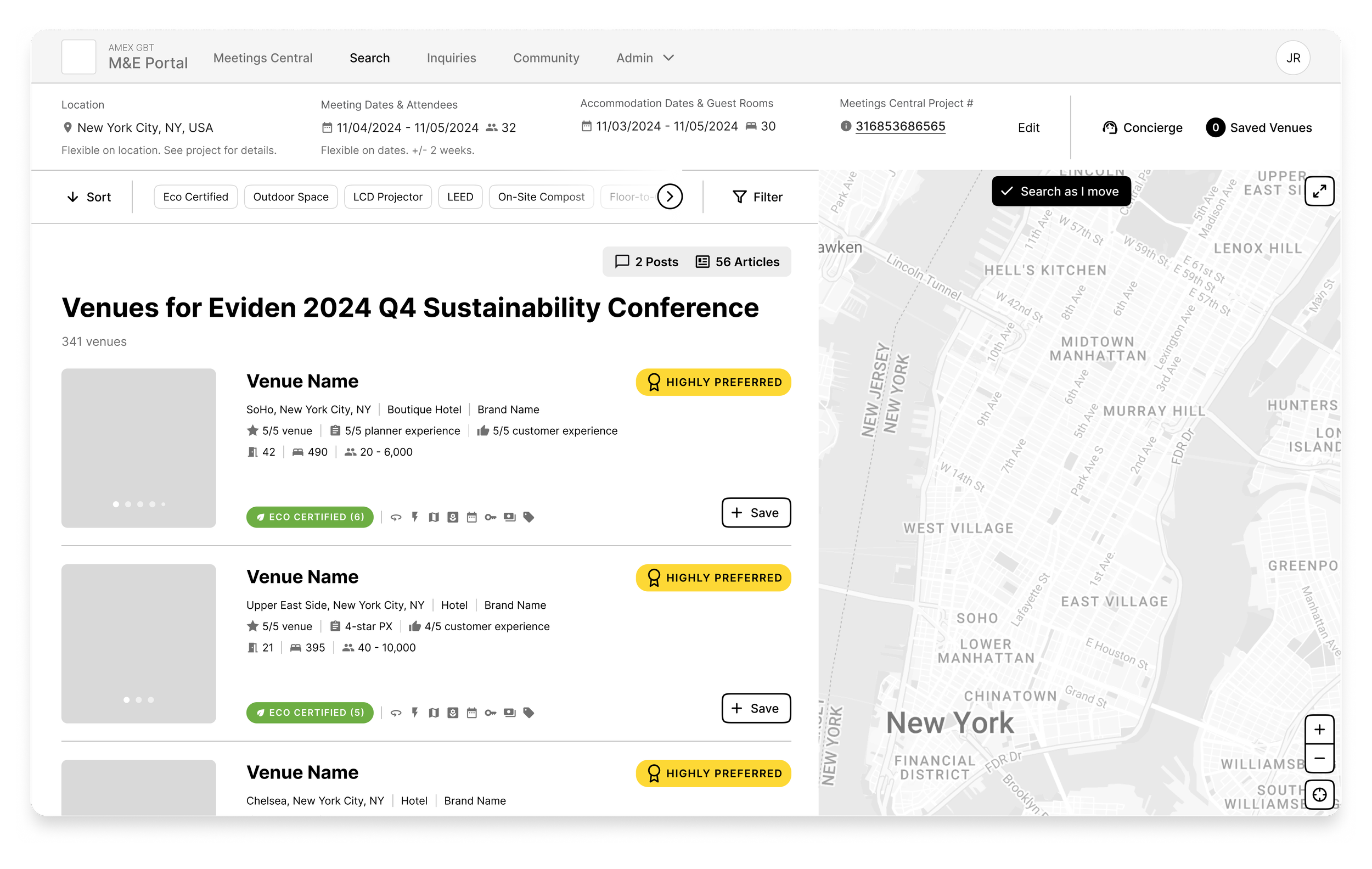
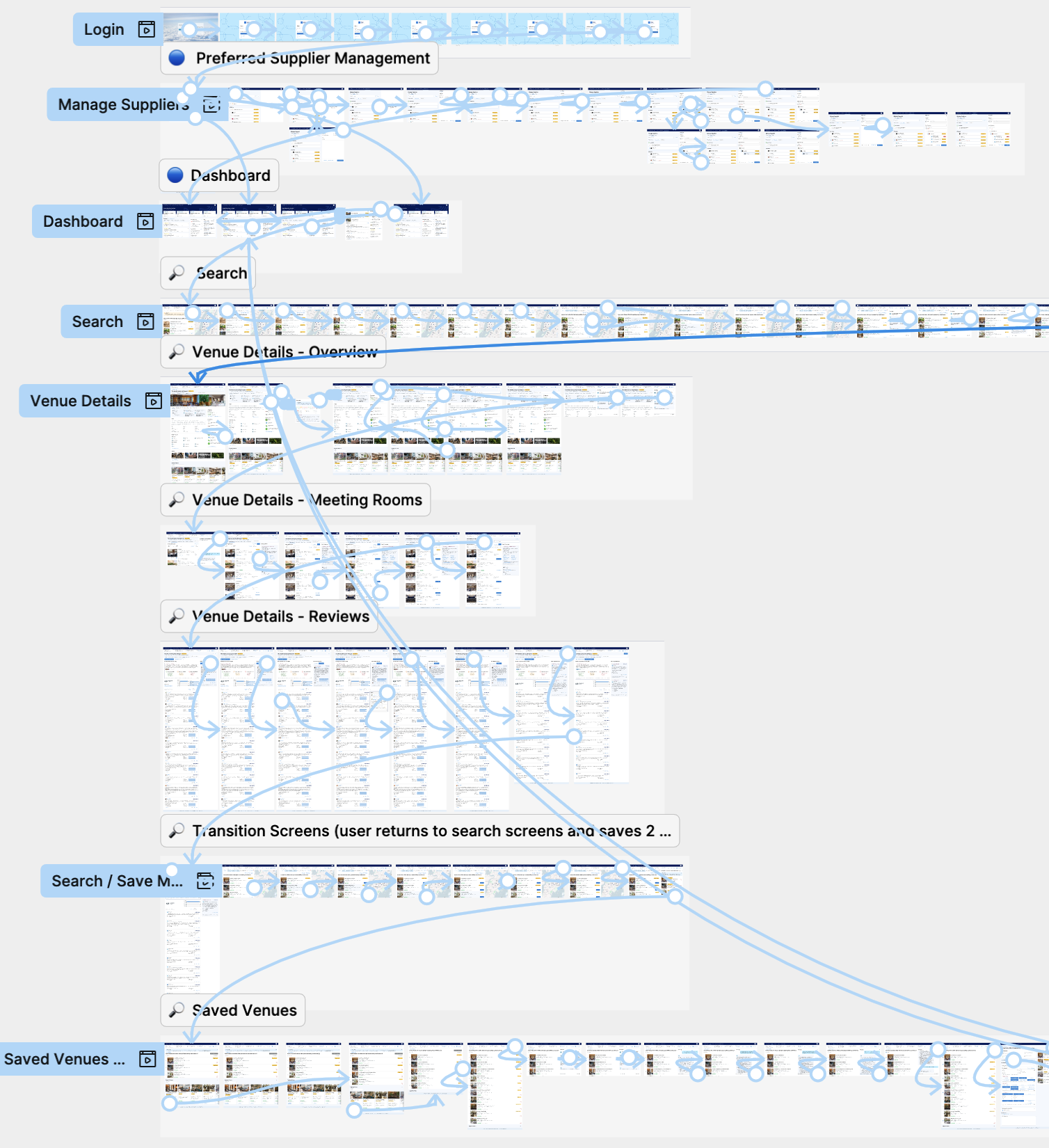
To establish a cohesive story for the pitch demo, our cross-functional team collaborated on core user flows—mapping out Managing Vendors, Searching Venues, Tracking & Managing RFP Responses, and Engaging in the Planner Community. Once we set the high-level architecture, we quickly refined the flows and iterated through bi-weekly design reviews to keep the team aligned. The Search Venues flow is shown below:
Lo-Fi to Hi-Fi Wireframes
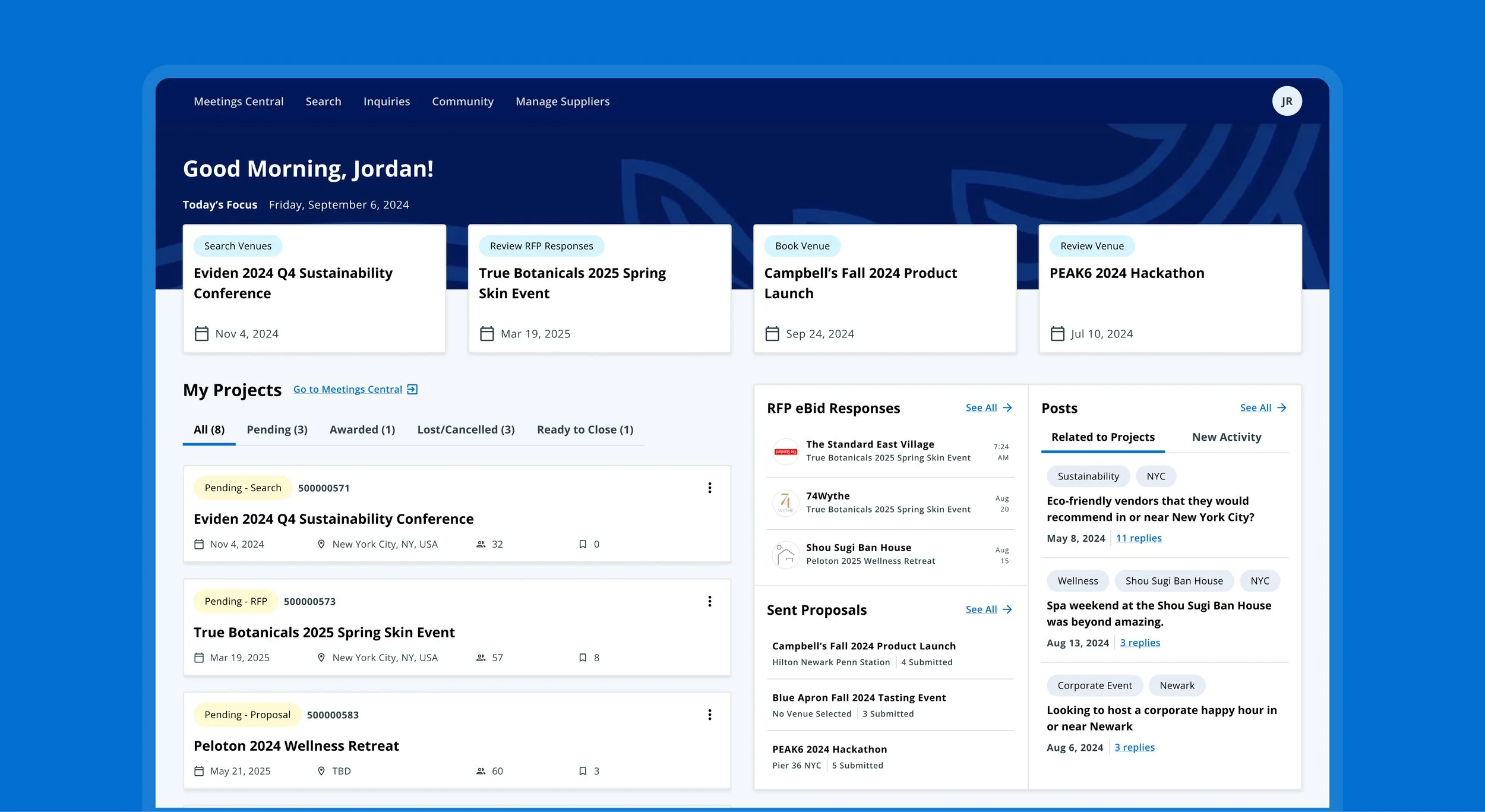
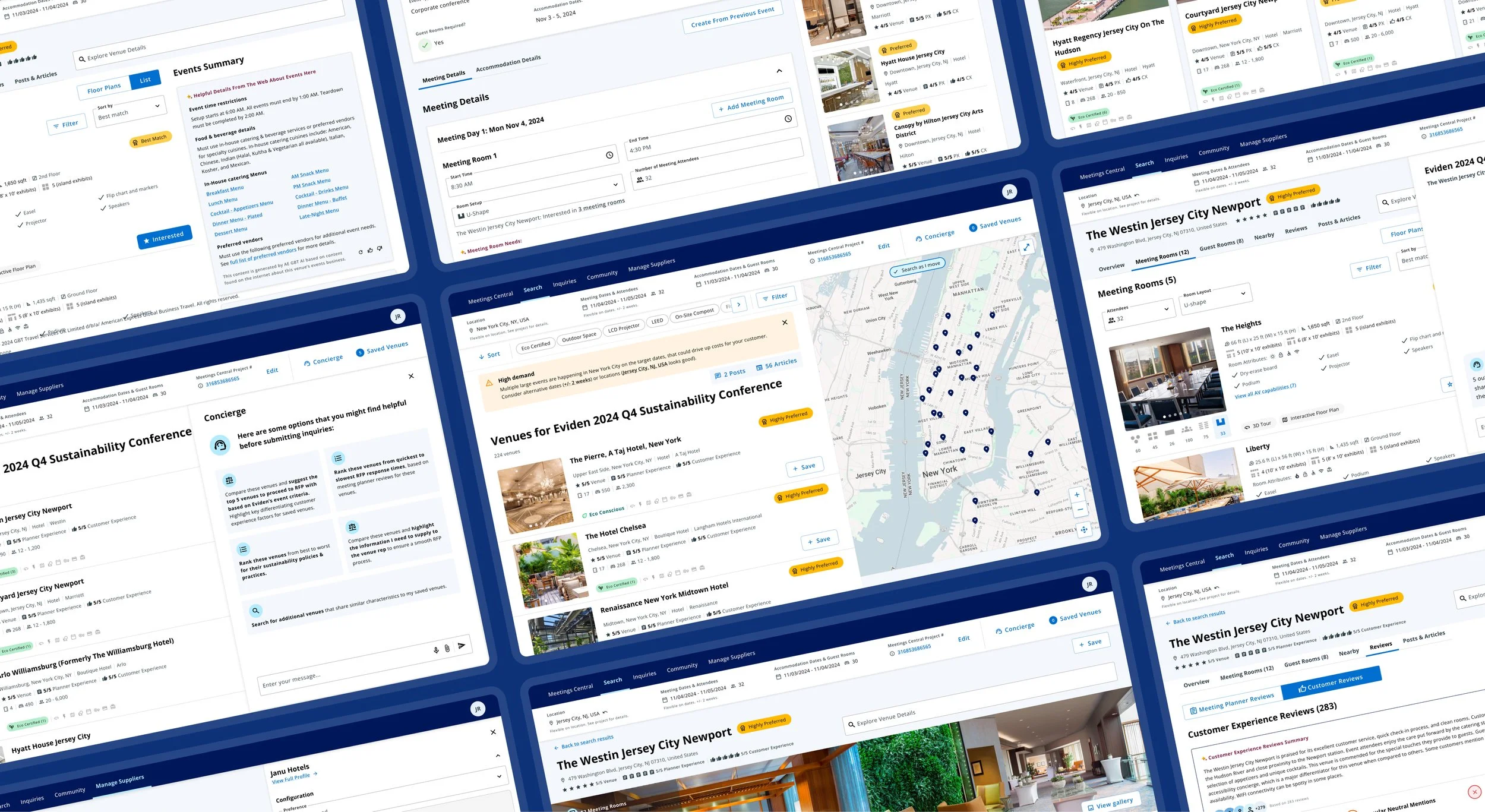
After wrapping up wireframes, we jumped into visual design. We pulled in components from our design system to build out a polished, high-density UI—setting up clear visual hierarchies, color-coded statuses, and preferred supplier highlights so a clear picture was painted during the demo.
Interactive Prototype
To ground our pitch presentation in a realistic product experience, we assembled our refined screen designs into an end-to-end interactive prototype. By linking the complete user journey across sourcing, RFP tracking, and community features, the interactive prototype allowed us to validate key interactive states and walk pitch stakeholders through a continuous, friction-free workflow.
Validating Our Direction
To validate our direction, we conducted a feedback session with an active corporate event planner. She confirmed that our core architecture aligned with real-world workflows and offered key insights to further streamline the experience.
Outcomes & Takeaways
Executive Pitch Buy-In
The interactive prototype successfully demonstrated the tangible value of unifying GBT's M&E tooling ecosystem, giving executive stakeholders a clear vision of the future product roadmap.
Cross Functional Alignment & Parallel Execution
To maintain velocity across parallel design streams, we kept cross-functional alignment tight through frequent review sessions—ensuring rapid iteration across low- and high-fidelity assets seamlessly fed into a unified pitch story.
Eliminating Tool Fragmentation
Corporate event planners frequently toggle between separate software tools for vendor discovery, RFP management, preferred supplier lists, and peer advice. By consolidating these 4 core tools into 1 integrated interface, MEET streamlines high-frequency tasks into a continuous workflow—dramatically reducing friction and accelerating time-to-proposal.
Multi Event Tracking
Planners managing 3 to 10 concurrent events require instant visual clarity to keep critical milestones and proposal deadlines from slipping through the cracks. Centralized daily actions into prioritized "Today's Focus" cards—keeping active RFP pipelines visible at a glance and giving planners immediate control over time-sensitive tasks.