An AI-Powered Workspace for Universal Clinical Triage & Decision Support
ROLE
Senior UX/UI Designer
INDUSTRY
Healthcare/HealthTech
TOOLS
Figma, Jira
45%
Faster Chart Review
~25%
Reduction in Clinician Burnout
2.5hrs
Time Saved Per Week
OVERVIEW
Streamlining EHR Workflows & Patient Chart Review
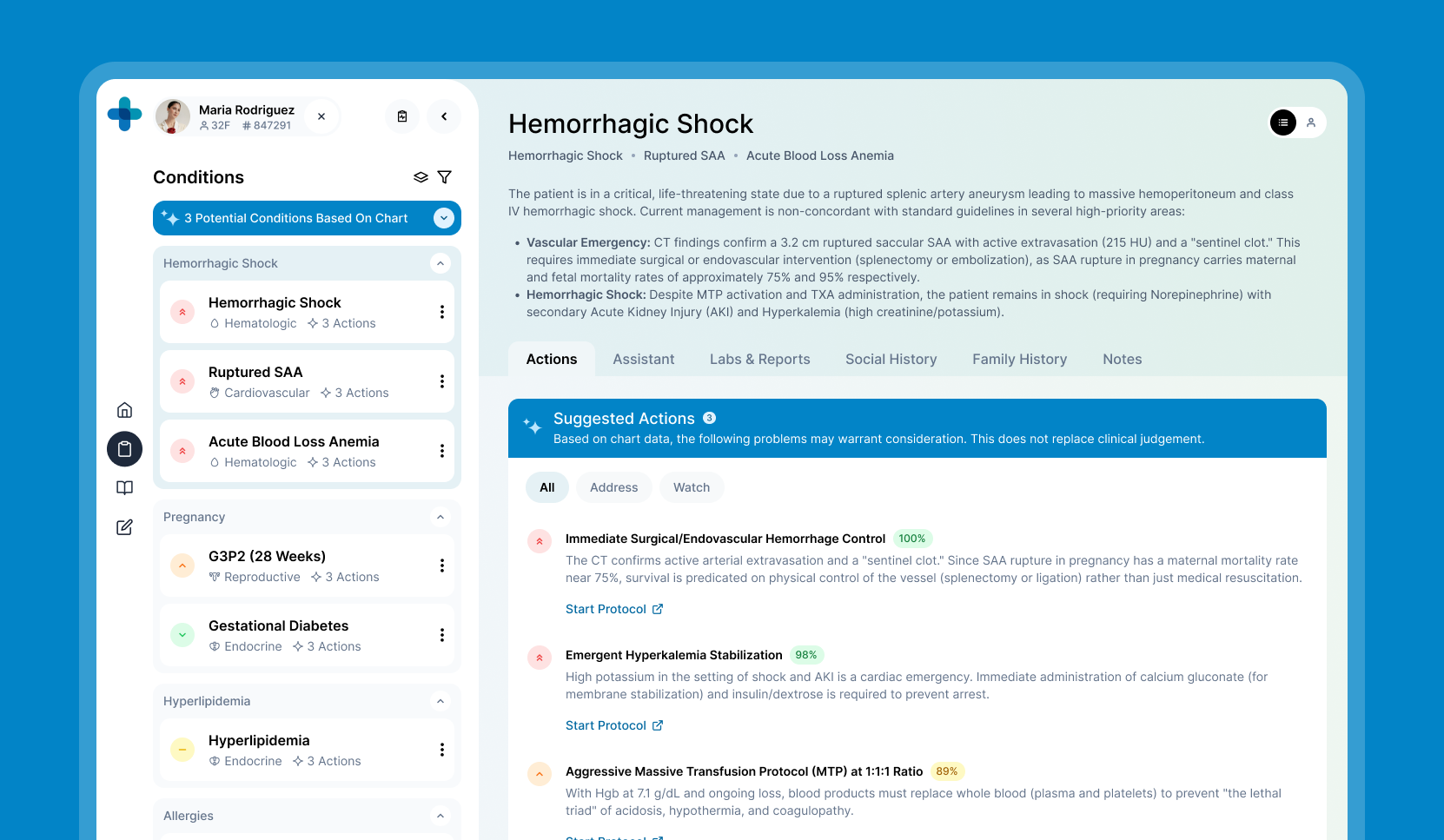
CLARA is a Clinical Decision Support System (CDSS) designed to streamline patient chart review and accelerate clinical decision-making for healthcare providers across all care settings. By synthesizing structured and unstructured Electronic Health Record (EHR) data, the platform provides automated, multi-condition triage recommendations and pairs them with an interactive, context-aware AI research assistant grounded in clinical guidelines.
THE CHALLENGE
What did we solve for?
01
Information Overload &
Data Dispersal
An average hospitalized patient generates over 1,400 daily data points across lab trends, unstructured progress notes, vital signs, and medication lists. Finding critical diagnostic clues requires searching through dense, multi-page EHR records.
The Solution: A unified workspace that automatically extracts vitals and lab trends into a single view, surfacing probability-weighted conditions without manual search.
02
Cognitive Load &
Context Switching
Toggling between 4–6 EHR screens and external browser tabs for medical literature drives severe mental fatigue. Over 77% of clinicians cite constant charting navigation as a primary driver of cognitive overload.
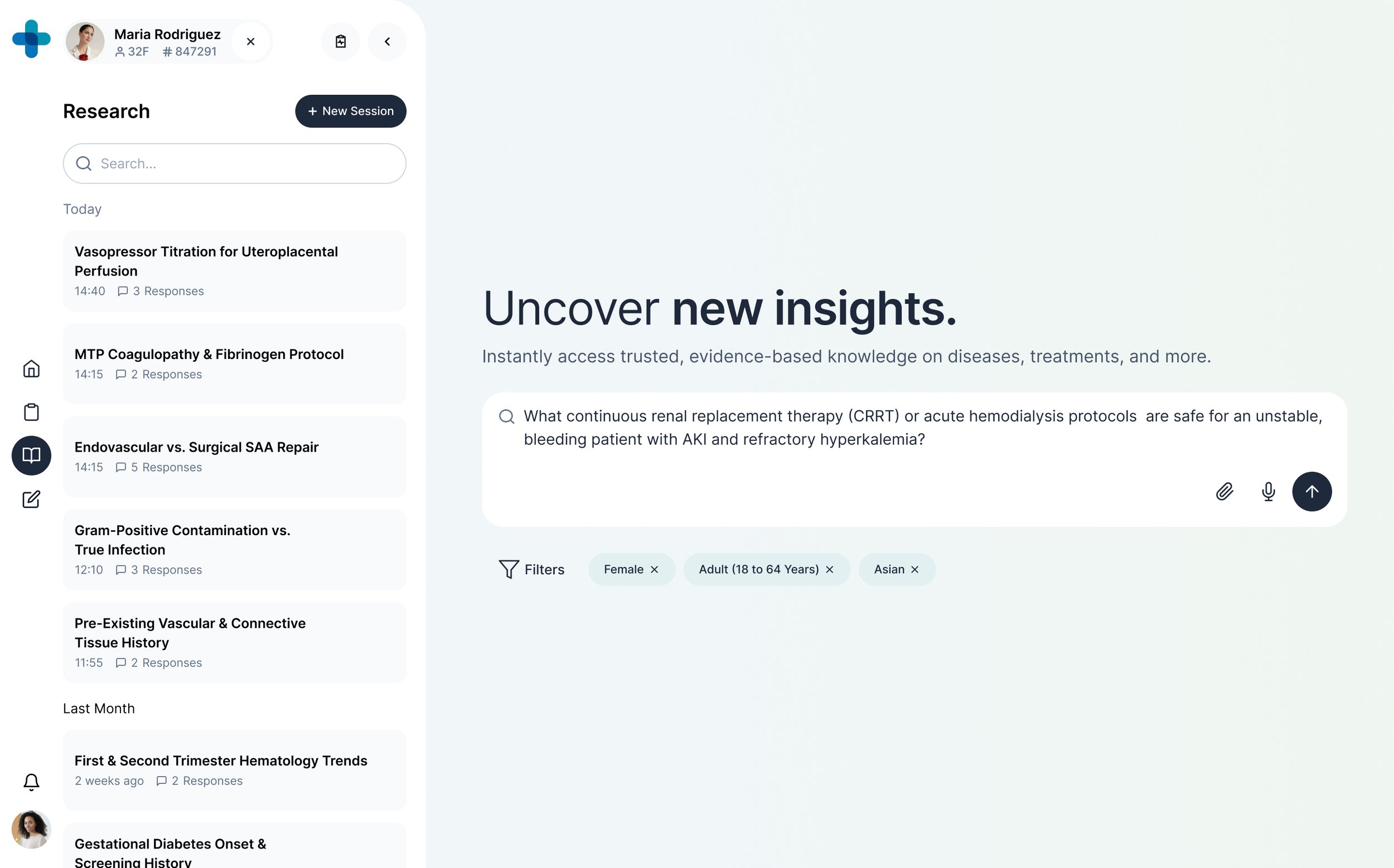
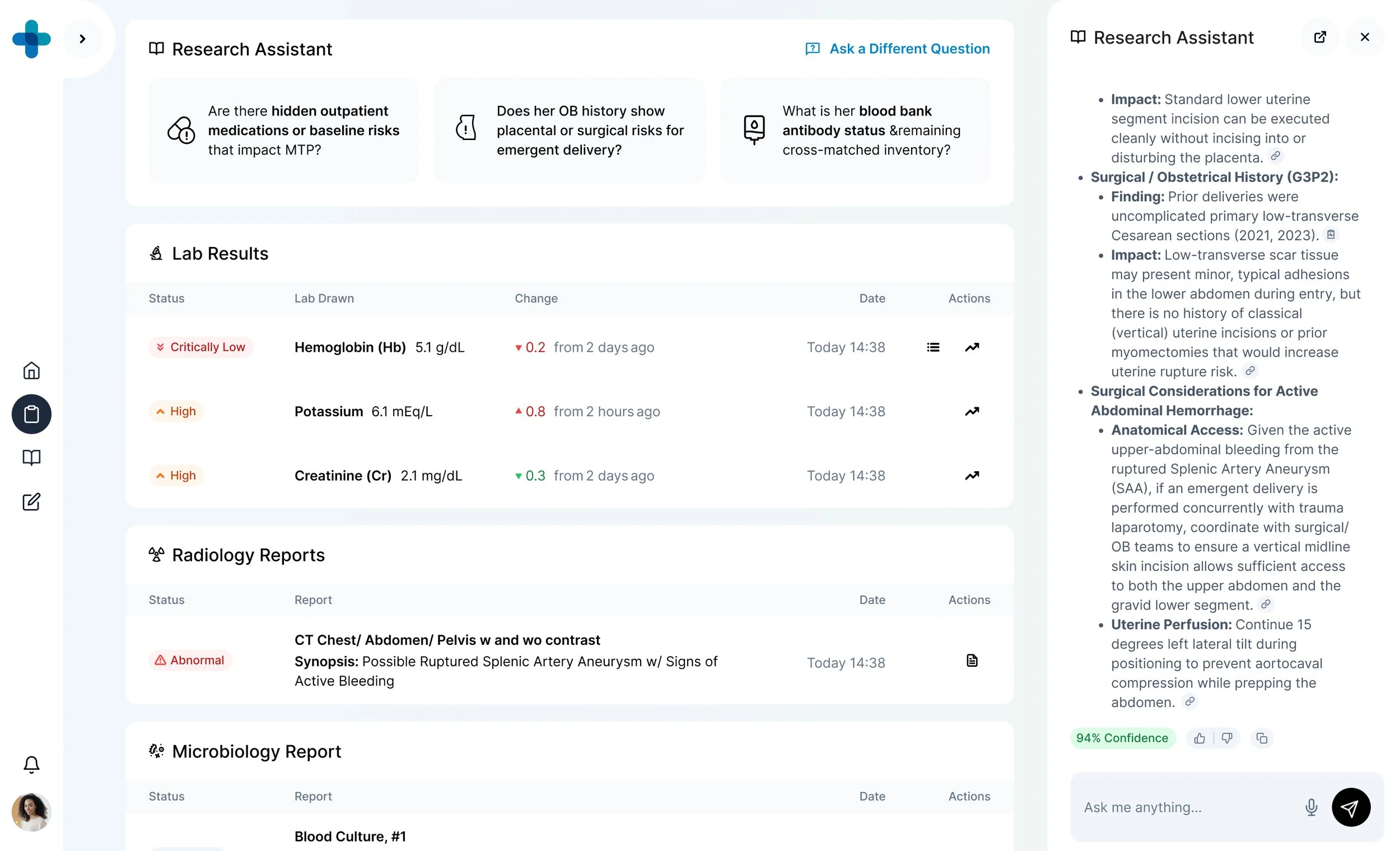
The Solution: A research experience that pairs live patient chart context with an interactive guideline assistant, automatically injecting patient data into search queries.
03
"Black-Box" Skepticism &
Lack of AI Trust
Clinicians are naturally skeptical of automated diagnostic tools when they cannot see how or why an AI reached a conclusion, leading to low adoption or unsafe reliance.
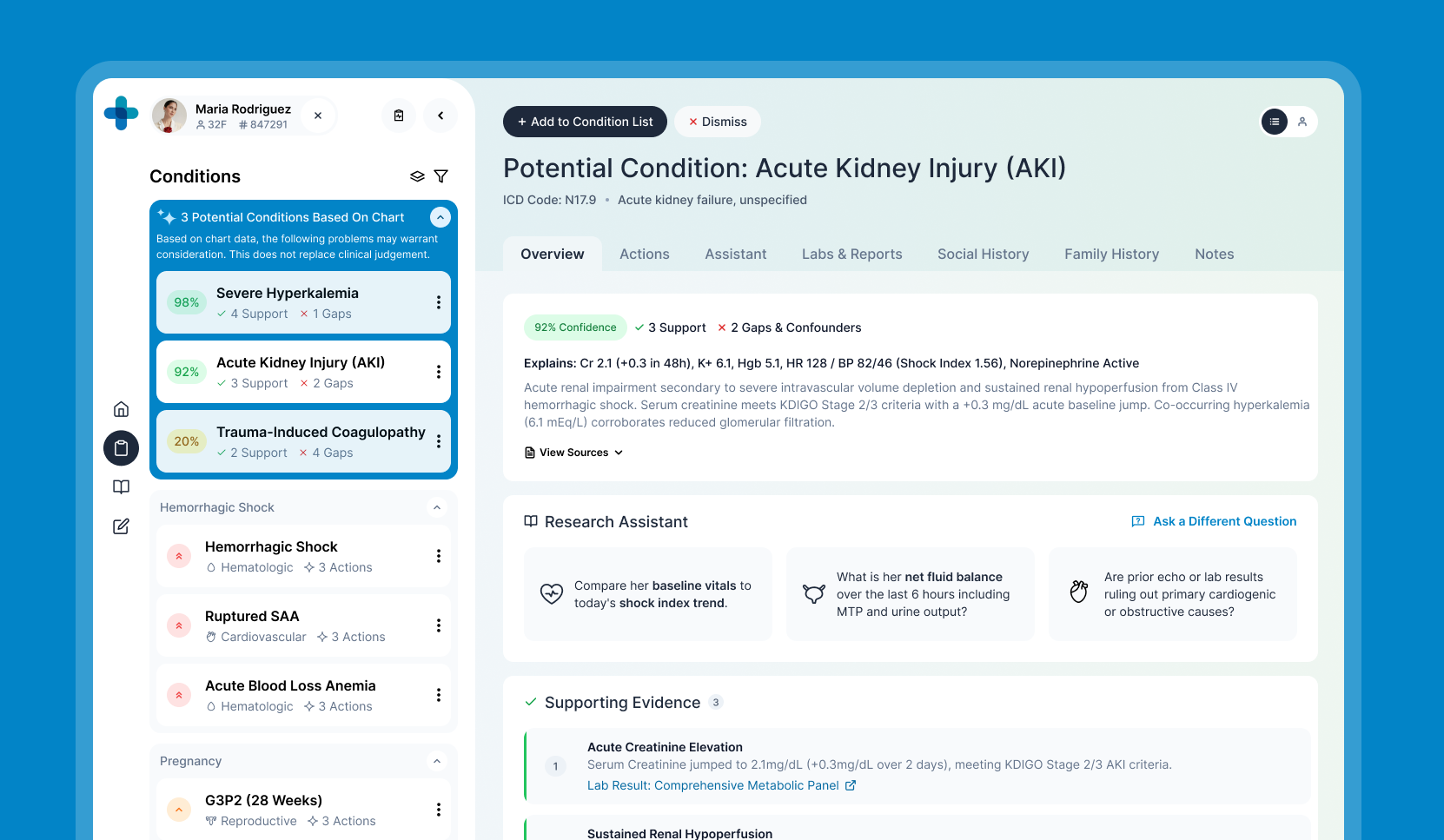
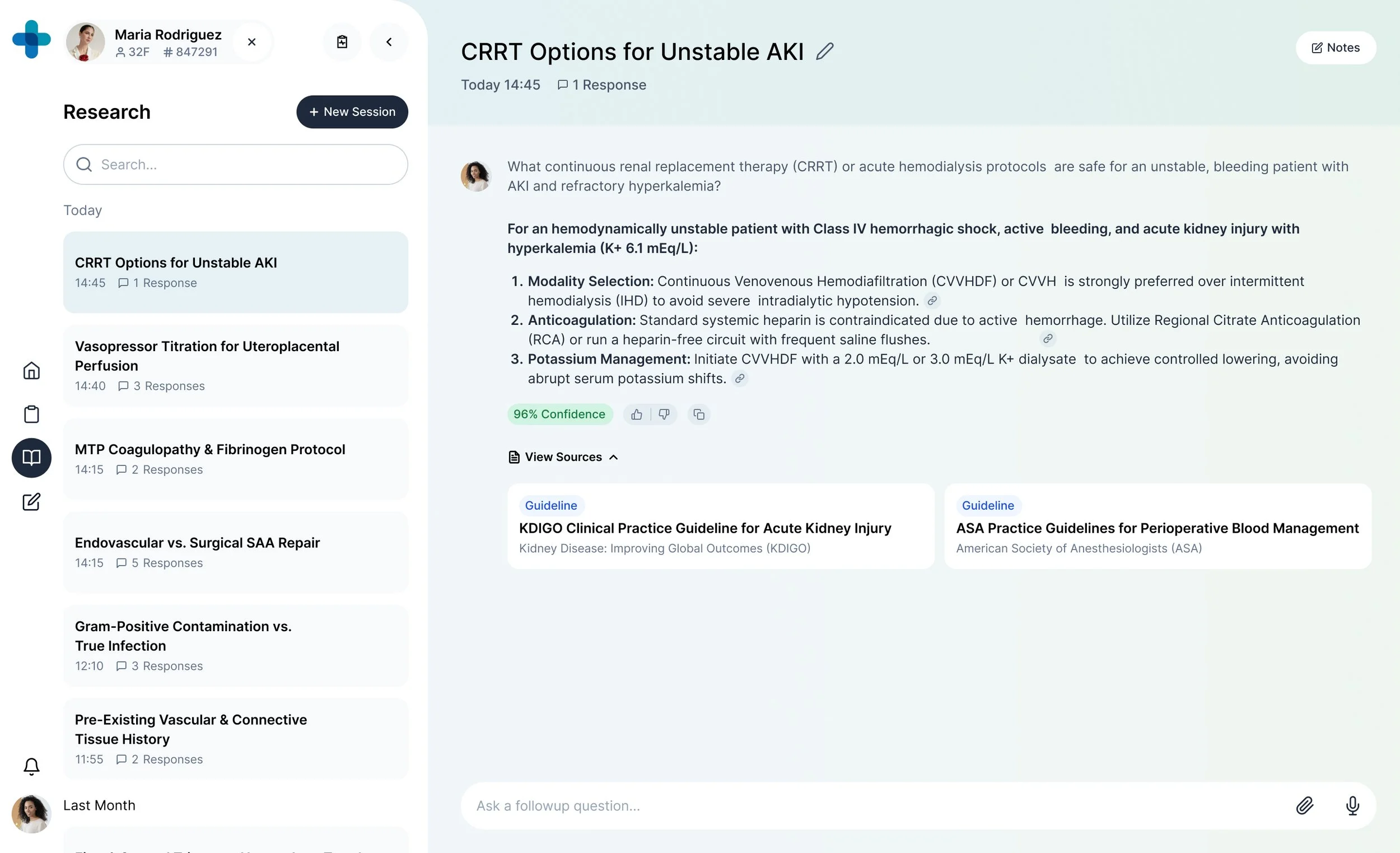
The Solution: Clinicians maintain total decision-making autonomy. They can hover or click on any suggested condition to inspect matching chart data and lab triggers, evaluate low confidence scores, and verify AI responses via grounded, clickable guideline citations.
FEATURES
Key functionality built to solve core user friction points and scale performance.
Chart-Aware AI Suggestions
Designed to reduce cognitive load and eliminate manual chart review, the AI engine extracts structured and unstructured EHR data to surface real-time clinical insights. Rather than replacing clinical decision-making, the platform acts as an upfront accelerator—letting clinicians validate AI-generated findings instead of starting from scratch.
Potential Conditions
Surfaces probable diagnoses based on active conditions, vital trends, and historical EHR data. Clinicians can select any condition to inspect supporting versus opposing evidence, review relevant lab reports, or query the AI research assistant directly for deeper chart analysis. This includes a list of diagnostic actions that can be taken in order to officially diagnose a condition.
Actions
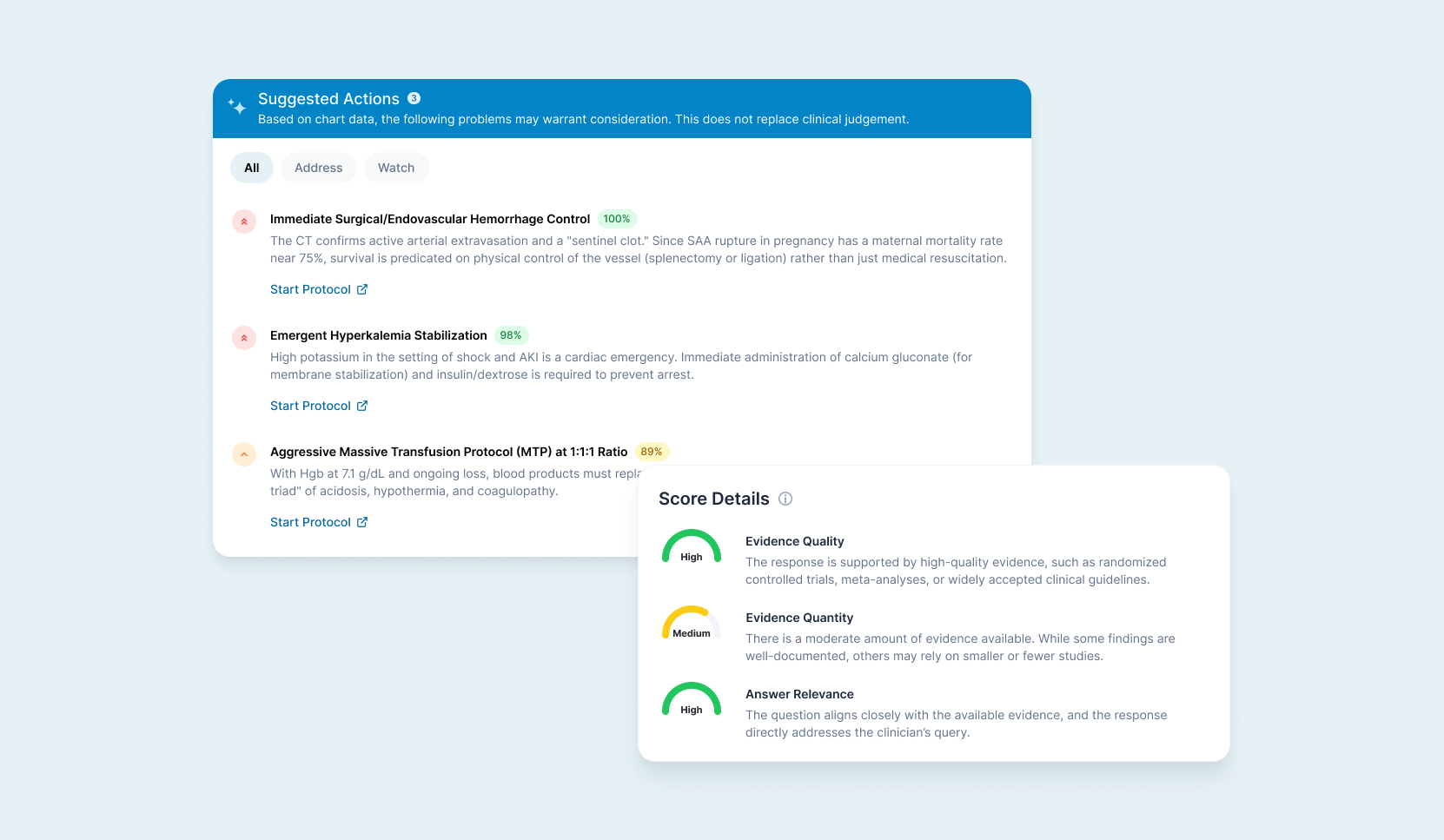
Within the identified conditions, a list of suggested actions is provided based on guideline concordance and the patient chart. This allows the clinician to quickly see any gaps in treatment, such as missing lab work or tests that are imperative for next steps in treatment. Each action has an urgency level that determines the priority and speed at which it needs to be performed.
Confidence Scores
As mentioned above, each AI output provides a confidence score so the clinician can easily know how thoroughly they need to validate the information provided. Confidence score metrics vary depending on what is being measured: conditions, response output, or actions.
Research Assistant
Designed to reduce cognitive load and eliminate manual chart review, the AI engine extracts structured and unstructured EHR data to surface real-time clinical insights. Rather than replacing clinical decision-making, the platform acts as an upfront accelerator—allowing clinicians to validate AI-generated findings rather than start from scratch.
Outcomes & Takeaways
Clinical Efficiency & Productivity Gains
Co-locating EHR context, lab trends, and real-time AI triage into a unified workspace shifts clinicians from manual data hunting to rapid validation.
This unification saves ~2.5 hrs/week and speeds chart review by up to 45%.
Alleviating Cognitive Strain & After Hours Documentation
Clinicians spend significant after-hours time completing administrative charting and literature lookups, driving high rates of occupational burnout.
By shifting physicians from manual data gathering to rapid validation of AI insights, the platform cuts administrative burden and reduces clinician burnout rates by approximately 25%.
Account Growth & Downstream Impact
Delivering a high-impact design solution and interactive prototype established immediate client trust and demonstrated the strategic value of explainable AI UX.
This expanded the engagement, resulting in 3 additional downstream projects.
CLIENT FEEDBACK
“Just wanted to say how awesome it is to work with you! I love how methodical you are and how you break things down - in addition to how high-quality your design work is!”
-Sonya M, Clinical Stakeholder